What is Shiva-yoga?
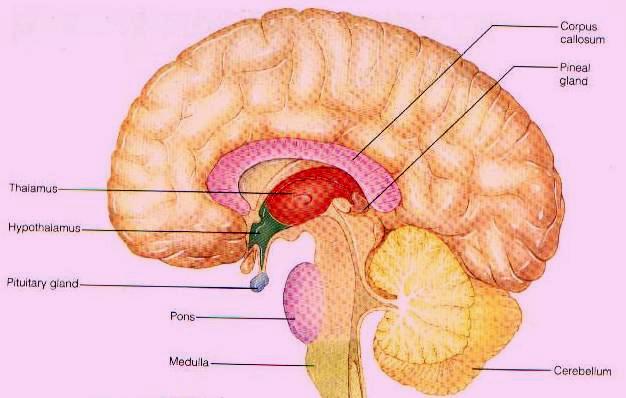
Shiva-yoga is a technique of opening the third eye. The third eye is an enigmatic organ having a universal mythological history. It is the middle eye of Shiva; it is the eye of Horas of Egyptian tradition, it is the horn of the unicorn. The third eye is an organ apparently dormant but innately acquired by mankind whose awakening is the birth right of every individual. It is an organ of inner vision which embraces eternity, while the two physical eyes look before seeing neither the past nor the future.
In Yoga-Shastra the pineal gland is spoken of as the third eye, the function of which takes place through the middle of the forehead. This third eye or the pineal gland is atrophied in man; the whole process of Shiva-yoga is directed to the awakening of this dormant pineal gland. It is a rudimentary organ in most people but it is evolving though slowly. It is possible to quicken its evolution into a condition in which it can perform its function of apprehending events comprehensively to give personal access to wisdom.
– From the Teachings of Param Poojya Mahatapsvi Shri Kumarswamiji
Technique of Opening the Third Eye
In Yoga-Shastra the pineal gland is spoken of as the third eye, the function of which takes place through the middle of the forehead. This third eye or the pineal gland is atrophied in man. The whole process of Shiva-yoga is directed to the awakening of this dormant pineal gland. It is a rudimentary organ in most people but it is evolving though slowly. It is possible to quicken its evolution into a condition in which it can perform its function of apprehending events comprehensively to give personal access to wisdom.
Shiva-yoga is an approach as well as an attempt to dive deep into the higher dimensions of human experience. Shiva-yoga visualizes all existence as a federation of spirits united and integrated in the Absolute. Quantum theory reveals us a basic oneness of the universe. It shows that we cannot decompose the world into independently existing smaller units. This is very much like the Eastern mystic’s description of the world.
In the following article, H.H. Shri Kumarswamiji explains how Shiva-yoga literally offers us a technique of opening the third eye.
Shiva in the Ancient Tradition
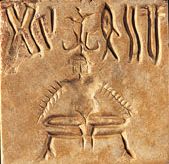
It is interesting to notice that the epithets that are applied to God Shiva such as Iruvan, Enmai, Pashupati and Tandavan have been found in the picto-phonographic seals of Mohenjo Daro and Harappa. Iruvan means he who exists or self-existent truth. Enmai means eight-bodied — earth, water, fire, air, ether, sun, moon and soul. These are the eight bodies. This only means that God Shiva is the cosmic principle. He is immanent and all-pervading.
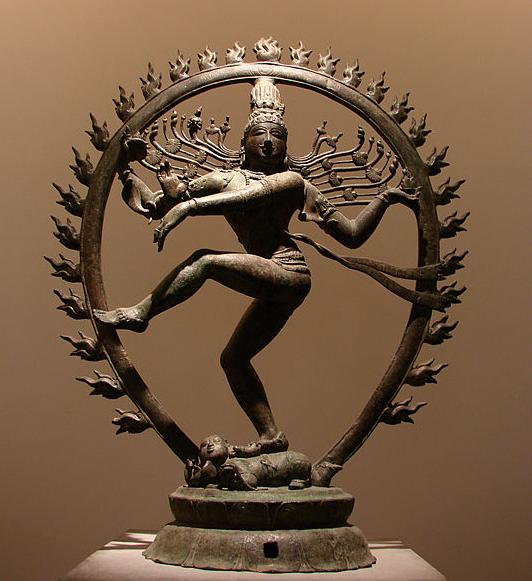
Pashupati means the Lord of the beasts. In Shaivism, jiva is considered to be a beast because of the primordial impulses and instinctive urges that go to compose the nature of ego. Tandavan means Nataraja — the dancing God. This only suggests that He is dynamic and blissful.
It is observed thus: “The essential significance of Shiva’s dance is threefold; firstly, it is the image of rhythmic play as the source of all movements within the cosmos; secondly, the purpose of this dance is to release the countless souls of men from the snare of illusion; thirdly, the place of dance, Chidambaram, the centre of the Universe, is within the heart”.
Shiva’s Cosmic Dance and Quantum Physics
Curiously enough Dr. Capra, the author of The Tao of Physics, marks the similarity between Lord Shiva’s dance and the quantum theory which states that matter is not static but dynamic. In the section entitled “The Yoga of Physics,” Dr. Capra explains this relationship:
Artists, scientists, Shamans, mystics — all have their own way of describing the world, both verbally and non-verbally. We shall focus mainly on two approaches. We shall look at modern Western science, on the one hand and Eastern mysticism — particularly the tradition of Yoga — on the other and we shall see that they lead to very similar views of the world.
In the Yoga tradition it is said that there are many paths, all leading to spiritual knowledge and self-realization. I believe that modern physics, to some extent, can be such a path. Its view of the universe is in harmony with those of the great yogis and sages. In that sense, I am going to talk of the Yoga of physics.
In contrast to the mechanistic view of classical Western science, the Eastern view could be called an organic, holistic or ecological view. Things and phenomena are perceived as being different manifestations of the same reality. The division of the world into separate objects, though useful and practical on the everyday level, is seen as an illusion — maya, as the Indians say.
To Eastern mystics, objects have a fluid and ever-changing character. Change and transformation, flow and movement play an essential role in their worldview. The cosmos is seen as one inseparable reality, forever in motion. It is alive, organic, spiritual and material at the same time. A very similar view is now emerging from modern physics.
Quantum Theory shows that the subatomic particles have no meaning as isolated entities but can only be understood as interconnections between various agencies of observation and measurement. Particles are not things but interconnections between things and these things are interconnections between other things and so on.
Quantum Theory thus reveals a basic oneness of the universe. It shows that we cannot decompose the world into independently existing smaller units. As we penetrate into matter, nature does not show us any isolated basic building bricks but rather appears as a complicated web of relations between the various parts of a unified whole.
This network of relations, furthermore, is intrinsically dynamic. According to Quantum Theory, matter is never quiescent but always in a state of motion. Microscopically, the materials around us may seem dead and inert. But modern physics pictures matter, not as passive and inert but as continuously dancing and vibrating.
This is very much like the Eastern mystic’s description of the world. Both emphasize that the universe has to be grasped dynamically. Its structures are not static, rigid ones but should be seen in terms of dynamic equilibrium.
Physicists speak of the continuous dance of subatomic matter which goes on all the time. They have actually used the words dance of creation and destruction or energy dance.
This naturally comes to mind when you see some of the pictures of particles taken by physicists in their bubble chambers. Of course, physicists are not the only ones talking about this cosmic dance. Perhaps the most beautiful example of this metaphor exists in Hinduism — the idea of the dancing Lord Shiva.
Shiva is the personification of the cosmic dance. According to Indian tradition, all life is a rhythmic interplay of death and birth, of creation and destruction. This image of the cosmic dance unifies, in a very beautiful way, ancient mythology, religious art, mystical insight and modern science.
The Dynamic Nature of Reality
Gary Zukav, author of The Dancing Wu Li Masters, endorses the view of Dr. Capra and confirms the concept of the dynamic nature of reality. His book bristles with brilliant thoughts and the very title of the book is arresting and, in a sense, cryptic.
When the concentrated energy disperses, it assumes the form of patterns and begins to dance. Wu Li means pattern of organic energy. The subatomic particles are not entities; they do not move in space and time, they do not carry any mass nor do they have any charge. They have no attributes other than the dance. They dance, they dance. Gary has illustrated this concept through material collected from quantum mechanics.
The study of complementarity, the uncertainty principle, quantum field theory and the Copenhagen interpretation of Quantum Mechanics have given rise to insights into the nature of reality very similar to those produced by the study of Eastern philosophy.
Science means unresting endeavour and continually progressing development towards an aim which the poetic intuition may apprehend but which the intellect can never fully grasp.
Max Planck expressed the relationship between scientific inquiry and the limits of intellectual understanding in these words.
Gary concludes his book by making these remarks:
The end of science does not mean the end of the unresting endeavour and continually progressing development of more and more comprehensive and useful physical theories. The end of science means the coming of Western civilization, in its own time and in its own way, into the higher dimensions of human experience.
Shiva-yoga and Higher Dimensions of Experience
Shiva-yoga is an approach as well as an attempt to dive deep into the higher dimensions of human experience. Since truth is multidimensional, Yoga sees ranges of life beyond matter, ranges of mind beyond life, ranges of supermind beyond mind and the range of Absolute or Sacchidanand beyond the supermind.
Shiva-yoga visualizes all existence as a federation of spirits united and integrated in the Absolute.
Transcending the Symbol Through the Symbol
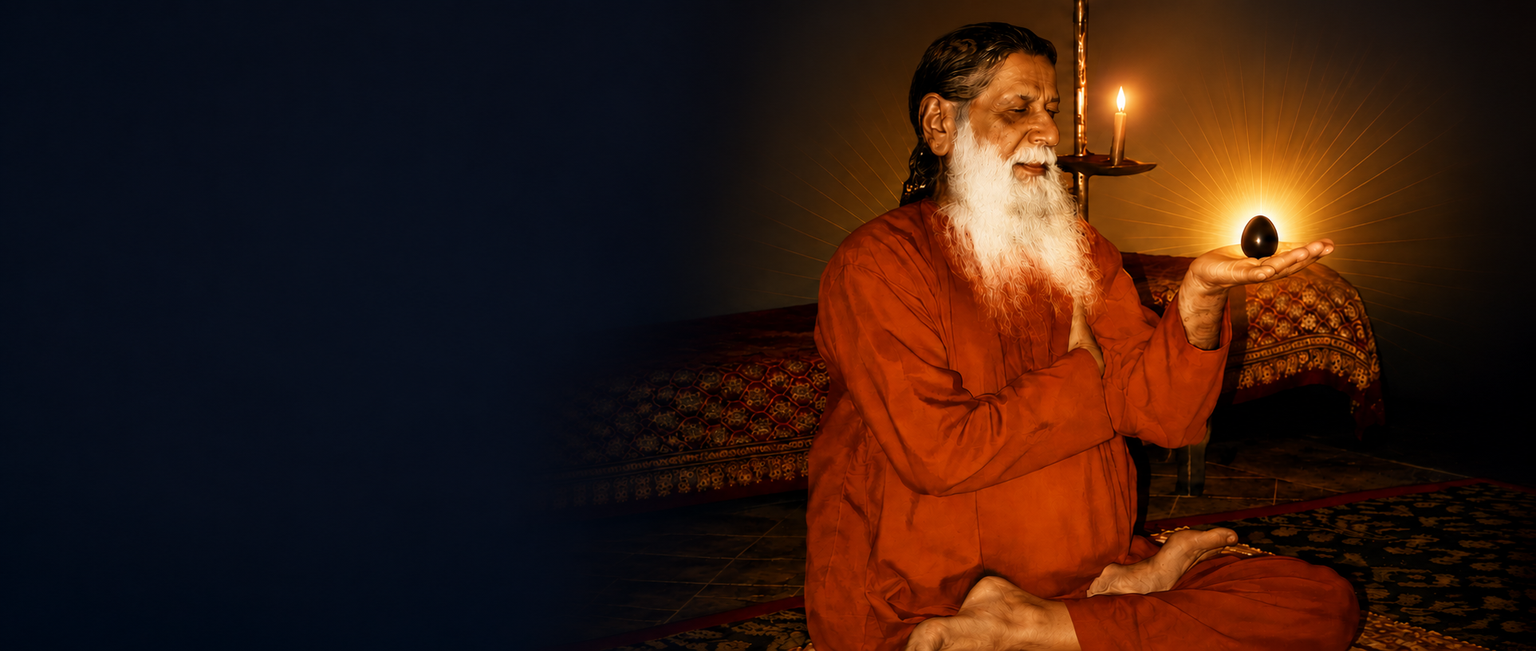
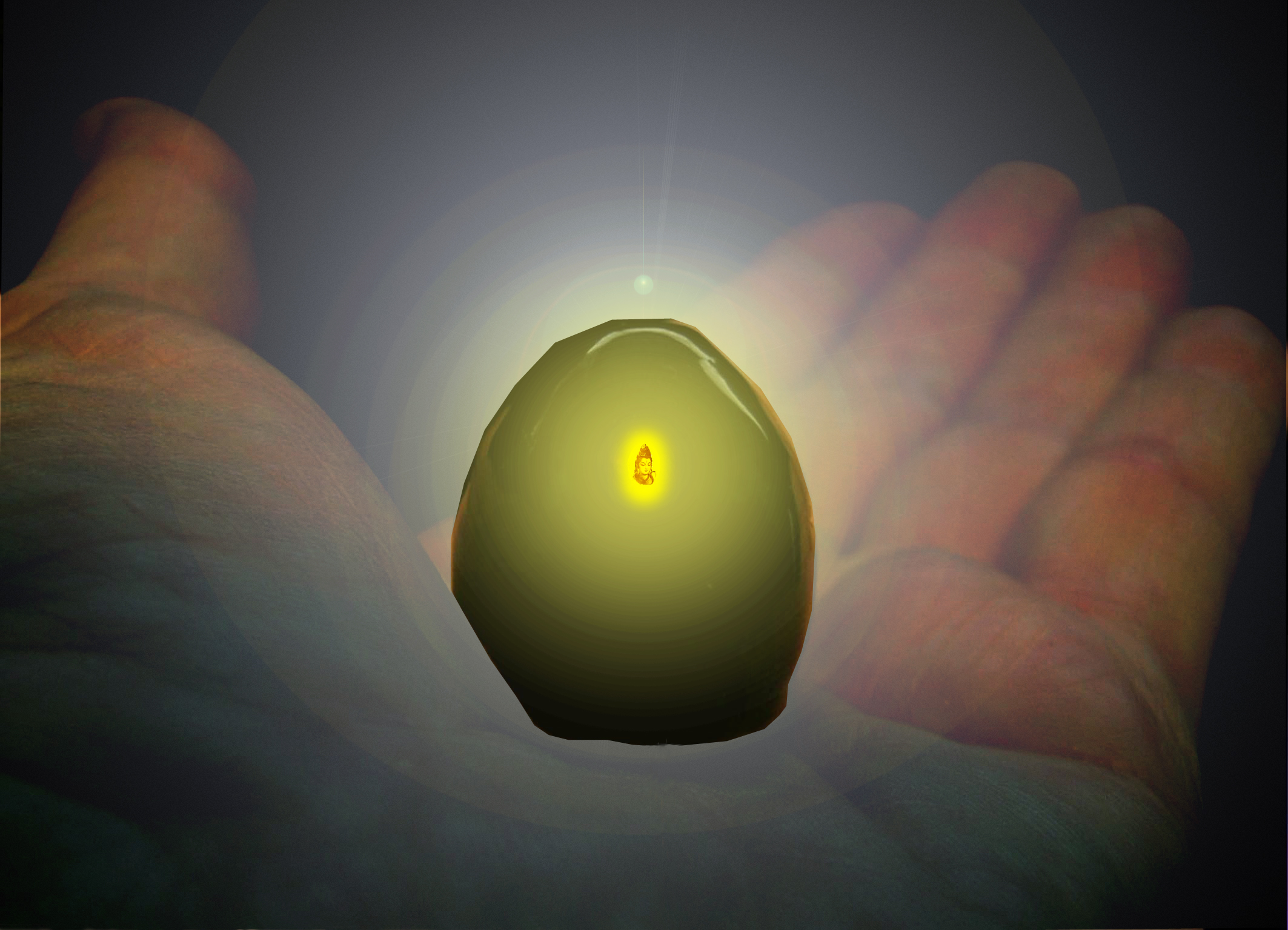
The great principle of Shiva-yoga aims at transcending the symbol through the symbol. The symbol is used of the human body as well as of Linga, which is placed on the palm of the left hand corresponding to the inward and outward discipline of the aspirant.
Linga assumes two forms as Ishta and Prana, like within and without; they are also inseparably related to each other. When through the exercise of unblinking gaze the aspirant is lost in meditation on Linga, he gradually loses the consciousness of within and without and finds himself in identity with the truth. Thus is the symbol transcended through the symbol.
Psychological Self-Discipline and Satsthala
This process of transcendence involves the profound and vital methods of psychological self-discipline and self-development so that the psychic life of man may express the spiritual life through the utmost possible expansion of its own richness, power and complexity.
It is only on the wide and rich efflorescence of psychological life that absolute attainment of the spiritual can be securely based. This psychological self-discipline is embodied in Satsthala — the sixfold path of the pilgrim’s progress.
From the teachings of Param Poojya Mahatapsvi Shri Kumarswamiji